Industrial Camera Systems
Thermal Image Analysis for Operating Equipment
Thermal Image Analysis for Operating Equipment
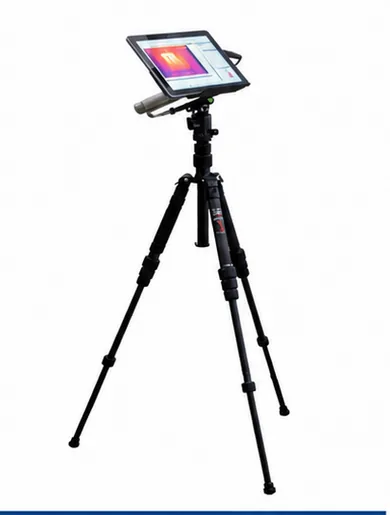
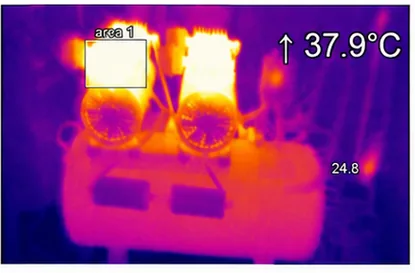
Key Features
- Industrial imager with 382 x 288 pixels for exact temperature measurement of -20 °C ... 900 °C
- Small sized rugged camera with motorized focus
- Superb distance-to-spot-size ratio up to 390:1 with sighting capabilities
- 80 Hz frame rate for monitoring of fast thermal processes
- Extensive ready-to-use package for an attractive price – including versatile image processing software with line-scan feature and connection cables
MTL-ETIA-400
| SPECIFICATION | |
|---|---|
| MTL-HTA-THC | |
| Optical resolution | 382 x 288 pixels |
| Detector | FPA, uncooled (17 μm pitch) |
| Spectral range | 8 – 14 μm |
| Temperature ranges | − 20 ... 100 °C, 0 ... 250 °C, (20) 150 ... 900 °C |
| Frame rate | 80 Hz / 27 Hz |
| Optics (FOV) | 18° x 14° (f = 20), 29° x 22° (f = 12.7), 53° x 38° (f = 7.7), 80° x 54° (f = 5.7) |
| Microscope lens (FOV) | 18° x 14° (f = 20), smallest measuring spot (MFOV): 240 μm |
| Focus | Motorized focus with manual control |
| Optical resolution (D:S) | 390:1 (18° optics) |
| Thermal sensitivity (NETD) | 80 mK |
| Accuracy | ±2 °C or ±2 %, whichever is greater |
| PC interface | USB 2.0 / optional USB to GigE (PoE) conversion |
| Process interface (PIF), standard | 0–10 V input, digital input (max. 24 V), 0–10 V output |
| Process interface (PIF), industrial | 2 x 0–10 V inputs, digital input (max. 24 V), 3x 0/4–20 mA outputs |
| Cable length (USB) | 1 m (standard), 3 m, 5 m, 10 m, 20 m |
| Ambient temperature | 0 °C ... 50 °C |
| Enclosure (size / rating) | Ø 36 mm x 100 mm (M30x1 thread) / IP 67 (NEMA 4) |
| Weight (without mounting bracket) | 216 - 220 g, depending on lens |
| Shock / Vibration | IEC 60068-2-27 (25G and 50G) / IEC 60068-2-6 (sinus shaped) |
| Power supply | USB |
| Host Computer | |
| Dimensions | 9.65 × 6.9 × 0.33 in (245 × 175 × 8.3 mm) |
| Display | Screen: 10-inch PixelSense™ display Resolution: 1800 × 1200 (217 PPI) Aspect ratio: 3:2 Contrast ratio: 1500:1 Touch: 10-point multi-touch Corning® Gorilla® Glass 3 |
| Memory | 4 GB or 8 GB RAM (optional) |
| Graphics | Intel® HD Graphics 615 |
| Processor | Intel® Pentium® Gold 4415Y processor |
| Security | TPM 2.0 for enterprise security Enterprise-grade protection with Windows Hello facial sign-in |
| Portable Tripod | |
| Weight | 0.98kg |
| Maximum Load | 8kg |
| Leg Sections | 5 |
| Maximum Height | 1445mm |
| Minimum Height | 340mm |
| Folded Length | 325mm |
Engineering Requirements
| Requirement | Information to Provide |
|---|---|
| Operating Temperature | Normal and maximum temperatures, and measurement locations |
| Installation Location | Inside the furnace, at the furnace wall, outside equipment, on piping or elsewhere |
| Imaging Requirements | Visible-light color, thermal, fixed, pan-tilt, 360° or mobile imaging |
| Communications | Ethernet, 4G / Wi-Fi or integration with an existing monitoring system |
| Certification Requirements | Explosion protection, ingress protection or other site-specific requirements |
Next Steps
Describe Your Site ConditionsNo model selection required
Initial Engineering ReviewConfirm the appropriate system architecture
Solution & QuotationRecommendations based on specifications
Project ImplementationInstallation, testing and integration
ENGINEERING CONSULTATION
Thermal Image Analysis for Operating Equipment — Selection guidance
Share your site conditions and estimated quantity to discuss technical fit and next steps.
Start with your site challenge and contact details. Specifications can follow.Industrial applications and selection
Equipment load, surface material, reflections and ambient temperature affect thermograms. Compare normal and abnormal heat patterns under comparable operating conditions.
Information for engineering review
Provide equipment type, load, distance and thermal samples. Confirm emissivity, measurement accuracy and alarm thresholds; a single thermal image does not establish a fault cause.