Systèmes de caméras industrielles
Miniature Antidéflagrant Thermal Caméra for Leak Surveillance
Infrared Thermography Leak détection System
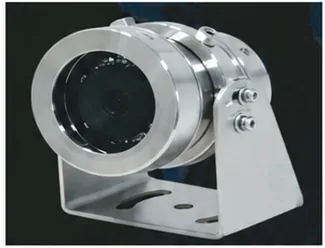
Thermography in VGA resolution
Features
- 640 × 480 pixel
- Radiometric video recording with 32 Hz / 125 Hz in subframe mode
- Interchangeable lenses: 15°, 33°, 60°, 90°
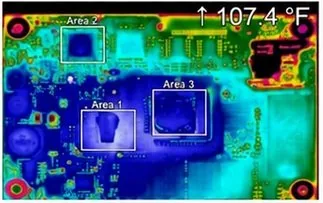
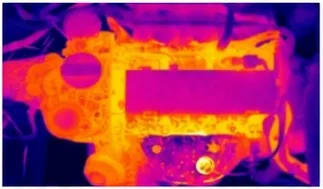
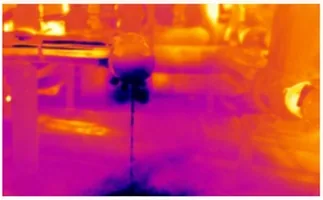
MTL-Ex-MC-LK-C
| Optical resolution | 640 × 480 pixel |
|---|---|
| Detector | FPA, uncooled (17 μm × 17 μm) |
| Spectral range | 7.5 – 13 μm |
| température ranges | −20–100°C, 0–250°C, 150–900°C, 200–1500°C |
| Frame rate | 32 Hz |
| Optics (FOV) | 33° × 25° FOV / f = 18.4 mm or 15° × 11° FOV / f = 41.5 mm or 60° × 45° FOV / f = 10.5 mm or 90° × 66° FOV / f = 7.3 mm |
| Thermal sensitivity (NETD) | 75 mK |
| Accuracy | ±2 °C or ±2 %, whichever is greater |
| PC interface | USB 2.0 |
| Process interface (PIF), standard | 0 – 10 V input, digital input (max. 24 V), 0 – 10 V output |
| Process interface (PIF), industriel | 2× 0 – 10 V input, digital input (max. 24 V), 3× 0 – 10 V output, 3× relay (0 – 30 V / 400 mA), fail-safe relay |
| Cable length (USB) | 1 m (standard), 5 m, 10 m 5 m and 10 m also as HT cable (180 °C) |
| Ambient température | −20 °C ~ 600 °C (1000 °C optional) |
| Relative humidity | 20 – 80 %, non-condensing |
| Shock / Vibration | IEC 60068-2 |
| Tripod mount | ¼ - 20 UNC |
Exigences techniques
| Exigence | Informations à fournir |
|---|---|
| température de fonctionnement | températures normales et maximales, et points de mesure |
| Lieu d’installation | À l’intérieur du four, sur sa paroi, à l’extérieur des équipements, sur les conduites ou ailleurs |
| Exigences d’imagerie | Imagerie couleur visible, thermique, fixe, orientable, à 360° ou mobile |
| Communications | Ethernet, 4G / Wi-Fi ou intégration à un système de surveillance existant |
| Exigences de certification | Protection antidéflagrante, indice IP ou autres exigences propres au site |
Prochaines étapes
Décrivez les conditions de votre siteAucun choix de modèle nécessaire
Étude technique initialeConfirmer l’architecture système adaptée
Solution et devisRecommandations selon vos spécifications
Mise en œuvre du projetInstallation, essais et intégration
ÉVALUATION TECHNIQUE
Systèmes infrarouges de détection des fuites de gaz — Aide au choix
Décrivez vos conditions d’exploitation et les quantités prévues pour préparer une recommandation.
Décrivez votre besoin et vos coordonnées ; les spécifications détaillées peuvent suivre.Applications industrielles et critères de sélection
Systèmes infrarouges de détection des fuites de gaz — En pétrochimie et raffinage, distinguez l’imagerie du four des exigences de la zone dangereuse.
Informations pour l’étude technique
À préciser : gaz et concentration, température de fond et circulation d’air, classement de zone dangereuse. Contactez MITSULI avec des photos et les spécifications du site.